BackgroundOverrun by the Competition: Skoda's Defeat in China
From
Henrik Bork | Translated by AI
5 min Reading Time
After years of success, Skoda is withdrawing from the Chinese car market. These explanations raise questions. A look at Skoda's history and successes in China.
Skoda is withdrawing from China. The brand has produced well over three million vehicles there.
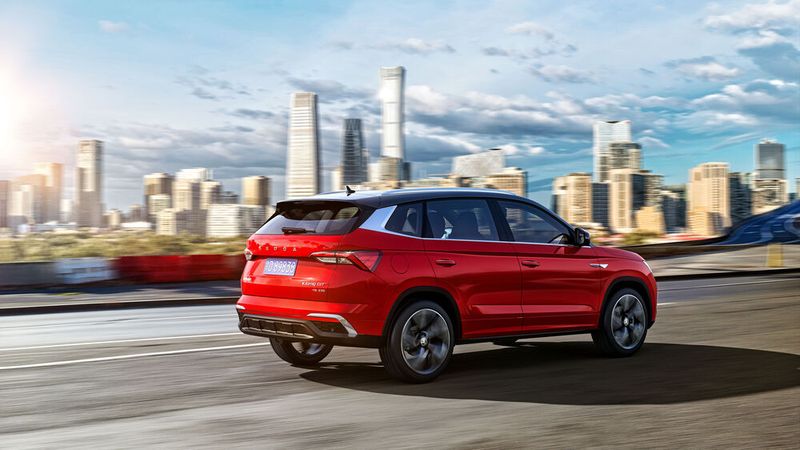
(Image: Skoda car)
Skoda is giving up in China. After two decades and several years of record sales, sales in the world's largest car market will be discontinued in the middle of this year, company spokespeople confirmed to the Reuters news agency.
The explanations given by analysts in the People's Republic are similar: electrified too late, not localized enough, ultimately no longer competitive. Chinese competitors such as BYD or Li Auto are too strong.
From a Successful Model to a Strategic Task
None of this is wrong. Nevertheless, the withdrawal without a fight from what is probably the toughest competition on earth leaves an uneasy feeling: the Volkswagen Group has sacrificed a strong brand (Skoda) here. In future, the resources are to be used for the VW brand's race to catch up. "Success by Volkswagen, defeat by Volkswagen", commented the Chinese financial portal Guoji Jinrong Bao. That probably sums it up quite well.
Since the market launch of the first Skoda model in China, the Octavia, in 2007, Skoda has positioned itself in China as a low-cost Volkswagen. According to the marketing, anyone who buys a Skoda gets VW technology at a lower price than the main brand.
Successful Model in Europe
In Europe, this model still works very well today. Skoda is one of the most successful volume brands on the continent, with a return of around 8.5 percent and a cash flow that would make many other VW Group brands blush with envy.
Customers pay about the same as a VW, usually less, but get more space in return - such as a larger trunk or more legroom. Even with electric cars, Skoda is more successful in Europe than the VW Group itself.
With Enyaq and Elroq, the brand has two successful e-models that don't want to come across as modern or hip, like the VW electrics. This is particularly popular with families, but also with fleet operators in Europe.
Limits of the Successful Model
Why doesn't this successful model also work in China? The answer lies in the margins. Skoda can be profitable in Europe because it has a cost advantage due to its production in Eastern Europe, especially in the Czech Republic, and the administration there. Even with a slight price reduction compared to the better-known Volkswagen brand, this is a solid business model.
For a while, Skoda was able to transfer this same business model to China. Based on Volkswagen platforms, on which Skoda only put its own "hats", with identical cost structures to VW, the Chinese business also ran brilliantly for a while.
Although the cost advantage here was never as strong as in Europe, the appeal of the Volkswagen brand was sufficient. The promise of a "low-cost Volkswagen" won over many customers.
Skoda Produced Over Three Million Cars
Nevertheless, Skoda experienced its peak in China between 2016 and 2018. With annual sales of over 300,000 units for three consecutive years and a peak of 341,000 units in 2018.
Models such as the Octavia, Superb and Kodiaq were strong in their segments and were able to attract more than three million Chinese customers in total. However, with the rise of e-mobility in China and the subsequent increasingly fierce price war among manufacturers of cars with combustion engines, margins shrank. Suddenly, those few percent less that could be achieved compared to VW became a problem. At the same time, the failure to develop an independent China strategy paid off.
Skoda Sales: Down 80 Percent in Four Years
The decline began in 2019 and accelerated thereafter, from 282,000 sales in 2019 to 173,000 (2020), 71,200 (2021) and finally 44,600 in 2022. A total decline of more than 80 percent within four years.
In 2023, Skoda was then only able to sell 23,000 units in China. Last year, it had reached 15,000. This was probably the latest point at which Wolfsburg decided that it was not worth saving the second brand in China in addition to the VW brand.
Building your own electric platform would have been expensive, as would using a third-party platform. Either way, it would have been very difficult to be as successful as before in the Chinese market, which has been shaken by "involution" - i.e. an extreme price war.
Date: 08.12.2025
Naturally, we always handle your personal data responsibly. Any personal data we receive from you is processed in accordance with applicable data protection legislation. For detailed information please see our privacy policy.
Consent to the use of data for promotional purposes
I hereby consent to Vogel Communications Group GmbH & Co. KG, Max-Planck-Str. 7-9, 97082 Würzburg including any affiliated companies according to §§ 15 et seq. AktG (hereafter: Vogel Communications Group) using my e-mail address to send editorial newsletters. A list of all affiliated companies can be found here
Newsletter content may include all products and services of any companies mentioned above, including for example specialist journals and books, events and fairs as well as event-related products and services, print and digital media offers and services such as additional (editorial) newsletters, raffles, lead campaigns, market research both online and offline, specialist webportals and e-learning offers. In case my personal telephone number has also been collected, it may be used for offers of aforementioned products, for services of the companies mentioned above, and market research purposes.
Additionally, my consent also includes the processing of my email address and telephone number for data matching for marketing purposes with select advertising partners such as LinkedIn, Google, and Meta. For this, Vogel Communications Group may transmit said data in hashed form to the advertising partners who then use said data to determine whether I am also a member of the mentioned advertising partner portals. Vogel Communications Group uses this feature for the purposes of re-targeting (up-selling, cross-selling, and customer loyalty), generating so-called look-alike audiences for acquisition of new customers, and as basis for exclusion for on-going advertising campaigns. Further information can be found in section “data matching for marketing purposes”.
In case I access protected data on Internet portals of Vogel Communications Group including any affiliated companies according to §§ 15 et seq. AktG, I need to provide further data in order to register for the access to such content. In return for this free access to editorial content, my data may be used in accordance with this consent for the purposes stated here. This does not apply to data matching for marketing purposes.
Right of revocation
I understand that I can revoke my consent at will. My revocation does not change the lawfulness of data processing that was conducted based on my consent leading up to my revocation. One option to declare my revocation is to use the contact form found at https://contact.vogel.de. In case I no longer wish to receive certain newsletters, I have subscribed to, I can also click on the unsubscribe link included at the end of a newsletter. Further information regarding my right of revocation and the implementation of it as well as the consequences of my revocation can be found in the data protection declaration, section editorial newsletter.
No Independent Products for Skoda
While VW Passenger Cars continues to fight for the market in China, relying on numerous partnerships with e-car start-ups and suppliers of batteries, chips and assistance systems, the Group is consistently pursuing an "in China, for China" strategy. Skoda, on the other hand, was sacrificed like a pawn on a chessboard.
In order to survive in China, Skoda, like VW, would have needed a larger product range of even better electric cars. But despite all its success, Skoda was not granted this in Wolfsburg, even in Europe. Yes, success by Volkswagen, defeat by Volkswagen is probably the most apt analysis of this sadly ended chapter in German automotive history in China.
What lessons can be learned from this? Above all these: It is no longer enough just to see China as a market and to operate with the same business models that work elsewhere. China has become a technology-driven car market in which it is not enough to be cheaper than someone else. And it is certainly no longer enough in China to rely primarily on combustion engines and see the development of electric cars as a kind of interesting experiment. Successes like the Enyaq remain the exception in this environment.
Hopes Rest on India
Skoda is now moving on. Business is going well in India, they say. Originally, Russia could also have stepped in to take over the abandoned market in China, but unfortunately this did not happen due to the war in Ukraine.
But whether it was wise in the long term to sacrifice the Chinese market with a view to margins remains to be seen. Skoda joins the list of China losers for the time being. Alongside Mitsubishi, Jeep, Suzuki and Renault. The brand has certainly not become any stronger as a result, and there are fears that it might have been smarter to take on the challenge of China.



:quality(80)/p7i.vogel.de/wcms/a0/47/a04725ef9bd09fb6c9341a1bea1b5d93/0130443083v1.jpeg "Here, a type of plastic pallet is produced by thermoforming (vacuum forming or deep drawing) at the corresponding division of New England Plastics in the USA. This division, which specializes in so-called liners, is now part of Ringmetall ... (Image:New England Plastics)")
:quality(80)/p7i.vogel.de/wcms/23/99/23992bf2dcdc432c9b7209c34a4a7c48/0129733089v1.jpeg "Stork relies on the modular Neoswiss turning system from Iscar to shorten the set-up times for its sliding headstock lathes and work more productively. (Image:Iscar)")
:quality(80)/p7i.vogel.de/wcms/7d/e2/7de2923434b2f1a78ba5482d8d335269/0113143253v1.jpeg "In our China Market Insider we regularly provide you with relevant information directly from China. (Image:© Eisenhans - stock.adobe.com)")
:quality(80)/p7i.vogel.de/wcms/9d/2b/9d2b802f800e5caf17b2831e74228cd3/screenshot-202026-03-03-20103822-609x343v1v1.png "Visual comparison: on the left, a clean, burr-free cut edge; on the right, typical burr formation with oxidation discoloration. This illustrates how strongly parameter control and gas management influence the quality of the result. (CO₂ laser, oxygen cutting gas, sheet thickness approx. 15 mm). (Image:Picture: Rime)")
:quality(80)/p7i.vogel.de/wcms/b7/36/b736dfebc16c42d6901d0d0e1f390493/3d-druck-20factory-20--20ki-20generiert-1920x1079v1.png "(Source: AI-generated)")
:quality(80)/p7i.vogel.de/wcms/79/b2/79b21aad663f4a7bd4472afc1c1afc62/0130433994v1.jpeg "Mission Joyride: The free-flying robot (shown here in the rendering) will relieve the ISS crew of logistics tasks from 2027 with its two mechanical arms. (Image:Icarus Robotics)")
:quality(80)/p7i.vogel.de/wcms/6b/45/6b4546fa6ebf305c3660326909363f32/0130437089v1.jpeg "Industrial AI in action: Rockwell Automation presents practical solutions for self-controlling production systems at the Hannover Messe. (Image:Rainer Jensen, Deutsche Messe)")
:quality(80)/p7i.vogel.de/wcms/78/e9/78e9188c25a8a94e67c34c9bf8ffe495/visual-agile-20robots-20and-20google-20deepmind-20partner-20to-20bring-20intelligence-20to-20robotics-2500x1406v1v1.jpeg "Together, the partners are developing adaptable, intelligent robots for a wide range of applications (Image:Agile Robots SE)")
:quality(80)/p7i.vogel.de/wcms/59/a2/59a2b11f0aa1b700eff02addd5de8703/adobestock-1788280853--c2-a9-20satria-20-e2-80-93-20stock-adobe-com-5081x2860v1v1.jpeg "Quantum computers require extreme cooling to temperatures close to absolute zero in order to keep qubits stable. (Image:satria - stock.adobe.com)")
:quality(80)/p7i.vogel.de/wcms/49/38/493876a248943456b7e4a6db6edfc454/0130230765v1.jpeg "Safe and reliable in aircraft construction: light-curing adhesive bond combined with universal fastening elements. (Source: Delo)")
:quality(80)/p7i.vogel.de/wcms/b5/c7/b5c749d16c8a2e789c1469c2c8c1c387/0130452780v1.jpeg "Volvo Trucks completes road tests with its new hydrogen-powered trucks. (Image:Volvo Trucks)")
:quality(80)/p7i.vogel.de/wcms/ba/69/ba6975f417a85147084f38dc2cd209e2/0130451386v1.jpeg "Together with Nvidia, Hyundai wants to develop an architecture that will be used for level 4 robotaxis (image) as well as for level 2 customer vehicles. (Image:Hyundai)")
:quality(80)/p7i.vogel.de/wcms/93/4d/934de334b47abaa526c78cba1417d7af/0130343495v1.jpeg "The new SU7 is available in three price categories, \"Standard\", \"Pro\" and \"Max\" (Image:Xiaomi)")
:quality(80)/p7i.vogel.de/wcms/df/a0/dfa048434bb94f1b7d030e346b25b3ae/0130373541v1.jpeg "From August, BMW will be producing the i3 at its main plant in Munich - which the car manufacturer has extensively rebuilt for this purpose. (Image:Rainer Haeckl)")
:quality(80)/p7i.vogel.de/wcms/ee/09/ee09acbd6dc896df25affaa9e871e6e5/0130440053v1.jpeg "IMS chip module for simple system integration into an ion mobility spectrometer. (Image:Fraunhofer IPMS)")
:quality(80)/p7i.vogel.de/wcms/10/6c/106cd22de5f68a0f74639d654827228c/0130345302v1.jpeg "Made in India: According to the India Electronics and Semiconductor Association (IESA), the country should be able to produce between 75 and 80 million chips by the beginning of 2027, once the plants currently under construction become operational. (Image:Pixabay (Montage: Sebastian Gerstl))")
:quality(80)/p7i.vogel.de/wcms/a5/ed/a5ed6fda029d362732a293d6b19d74c4/0130444216v1.jpeg "Thirteen executives from the Chinese chip industry have drawn up a plan to achieve an 80% self-sufficiency rate for semiconductors by 2030. (Image:Maxim_Kazmin - stock.adobe.com)")
:quality(80)/p7i.vogel.de/wcms/31/a6/31a646018b34d8e0a44bfc8bf17837f6/0130361632v1.jpeg "For many companies, PFAS are considered indispensable in electronics production. (Image:freely licensed)")
:quality(80)/p7i.vogel.de/wcms/d4/14/d41468d77cd3a2d5d89550420eedac79/0127654988v1.jpeg "Porsche's billion-dollar losses weigh on Volkswagen's quarterly results. (Image:Rehberg / VCG)")
:quality(80)/p7i.vogel.de/wcms/e6/53/e6539c6b5df2d2af2970ca981131fb42/0130215307v1.jpeg "Volkswagen is in first place in the first two months of 2026—no one has sold as many cars in China as the car manufacturer. (Image:Volkswagen)")